

Logistics for the Mining Sector: Compliance & Precision
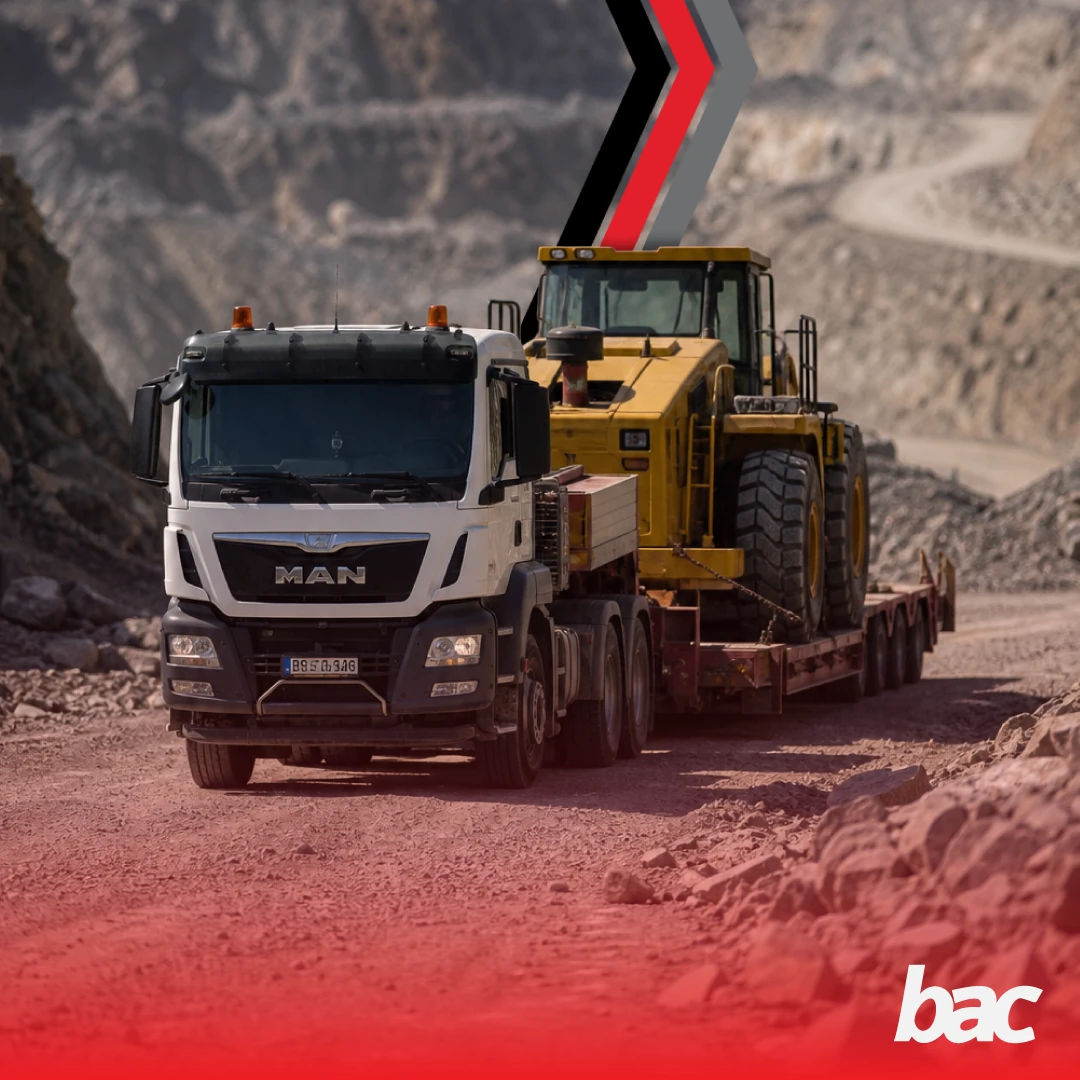
Mining operations don’t run on schedules.
They run on continuity.
A delayed delivery doesn’t just sit in transit; it stops drilling, halts blasting schedules, and leaves teams waiting on-site with no ability to proceed.
In some cases, a single shipment arriving late or incorrectly classified can hold up operations for 24 to 72 hours. In mining, that’s not a logistical inconvenience. It’s a direct operational cost.
That’s why logistics in this sector isn’t a support function.
It’s part of the operation itself.
At BAC Logistics, we don’t approach mining logistics as movement. We approach it as control, because once cargo is in transit, especially across remote or cross-border routes, your ability to correct problems is already limited.
Where Mining Logistics Actually Fails
Most disruptions don’t come from poor planning.
They come from gaps between compliance, safety, and execution, gaps that only show up once cargo is already moving.
1. Compliance That Breaks at the Border
On paper, everything can look correct.
Cargo is classified. Documentation is prepared. Transport is scheduled.
But what often goes unnoticed is misalignment, small inconsistencies in how cargo is classified or declared across suppliers, transporters, and clearing agents.
That doesn’t get flagged at dispatch.
It gets flagged at the border.
And by that point:
-
The vehicle is already in the queue
-
The site is already expecting delivery
-
The operation is already dependent on that cargo
Now the issue isn’t compliance, it’s delay under pressure.
A single inconsistency can hold cargo for 24–48 hours. Not because regulations were ignored, but because they weren’t aligned early enough.
At BAC Logistics, we treat compliance differently.
It’s not a documentation step.
It’s a control point before movement begins.
-
Classification is aligned across all parties before dispatch
-
Cross-border requirements are addressed before routing
-
Documentation is verified against every jurisdiction involved
Because once cargo reaches the border, resolution is no longer in your hands.
2. Safety Treated as a Requirement, Not a System
In mining logistics, safety doesn’t fail because it’s ignored.
It fails because it isn’t consistent.
We see breakdowns where:
-
Carriers are selected based on availability, not cargo risk
-
Handling procedures change between the origin and the delivery
-
Safety requirements are understood individually, but not aligned
In mining environments, that inconsistency is where risk escalates.
Remote locations limit response capability.
Access is controlled.
And even minor incidents carry operational and regulatory consequences.
At BAC Logistics, safety is structured into the movement itself.
Carrier selection, routing, and handling procedures are all aligned to the risk profile of the cargo before transport begins.
Because in this environment, safety isn’t about compliance.
It’s about control under real conditions.
3. Lack of Precision in High-Stakes Environments
Precision isn’t a performance metric in mining.
It’s a requirement.
It’s not just about delivery, it’s about delivering:
-
To the correct site
-
At the correct time
-
In the correct sequence
Where things break down is in coordination.
Equipment arrives before sites are ready.
Critical components are delayed while non-essential cargo arrives first.
Routes don’t account for access or infrastructure constraints.
Individually, these seem manageable.
Operationally, they compound quickly:
-
Work stops
-
Timelines shift
-
Costs escalate
At BAC Logistics, precision is structured, not assumed.
Deliveries are aligned to operational timelines.
Routes are planned around real conditions.
Coordination happens across the full journey, not just at dispatch.
Because in mining, timing isn’t flexible, and neither is the cost of getting it wrong.
The Reality of Mining Logistics Across South Africa and Beyond
Mining logistics doesn’t operate in controlled environments.
It moves across:
-
Long-distance domestic routes
-
Remote, infrastructure-limited regions
-
Cross-border corridors into the SADC region
Each movement introduces different regulations, enforcement standards, and stakeholders.
The risk isn’t in any one factor; it’s in how they interact.
At BAC Logistics, our focus isn’t on reach.
It’s on managing that complexity before movement begins.
Because once cargo is in transit across these environments, your ability to adjust is limited.
What Effective Mining Logistics Actually Requires
Successful mining logistics isn’t about managing steps.
It’s about aligning them before anything moves.
Compliance Alignment
-
Consistent classification across all documentation and jurisdictions
-
Alignment between all stakeholders before dispatch
-
Cross-border requirements addressed upfront
Safety Integration
-
Carrier and equipment selection based on cargo risk
-
Consistent handling procedures across the full journey
-
Planning built around risk, not convenience
Operational Precision
-
Delivery schedules aligned with site operations
-
Route planning based on real infrastructure and access conditions
-
Full coordination from dispatch to delivery
When these elements are aligned, logistics supports operations.
When they’re not, it becomes the point of failure.
Control Is What Separates Movement from Performance
Mining logistics isn’t just about moving goods from A to B.
It’s about maintaining control across:
-
Compliance
-
Safety
-
Timing
-
Coordination
At BAC Logistics, we structure every movement around that control.
Nothing moves until compliance is aligned.
Safety is embedded into every stage.
All stakeholders operate against the same plan.
Because once cargo is in transit, especially in remote or cross-border environments, correction becomes limited.
Conclusion
In mining, logistics failures don’t stay contained.
They stop production.
They delay projects.
They increase costs fast.
And most of the time, they don’t come from major mistakes.
They come from small gaps that only show up once the shipment is already in motion.
That’s where control is lost.
If your logistics involves cross-border coordination, high-risk cargo, or multiple stakeholders, the real risk isn’t always visible upfront; it shows up when your shipment is already in motion.
At that point, your options are limited.
At BAC Logistics, we identify and resolve those risks before your cargo moves, when they can still be controlled.
If your next movement is critical, speak to our team before it begins.